
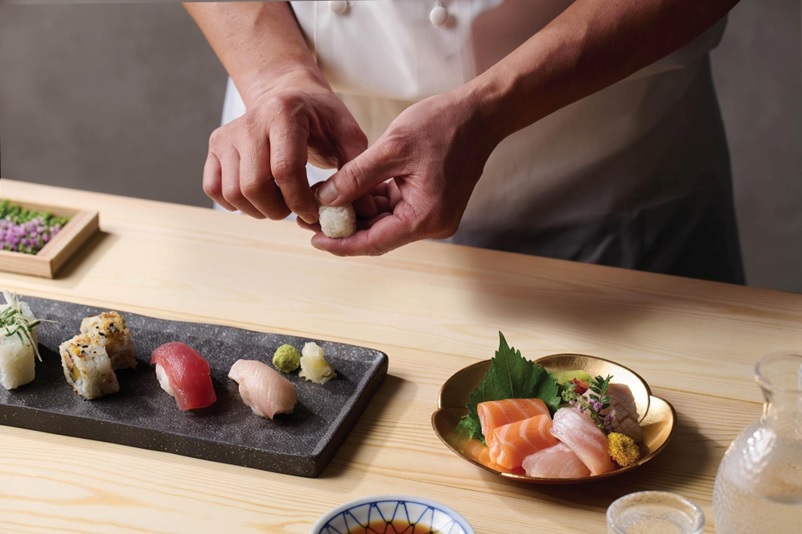
Sushi is often admired for its visual beauty, but true craftsmanship lies in two often-overlooked fundamentals: rice temperature and knife work. These elements define texture, balance, and flavor more than any garnish or presentation style. In traditional sushi preparation, mastering these details is essential for achieving consistency and quality.
The Importance of Rice Temperature
Sushi rice is not just a base—it is the foundation of every piece. Its temperature directly affects taste, texture, and how the fish interacts with the rice. Ideally, sushi rice is served slightly warm or at room temperature, allowing it to maintain a soft yet structured consistency.
If the rice is too hot, it can overpower the delicate flavor of raw fish and affect its texture. If it is too cold, the rice becomes firm and loses its natural stickiness, making it harder to shape and less pleasant to eat.
Chefs carefully control cooling using traditional wooden containers and precise timing to ensure the rice reaches the ideal serving condition.
Knife Work as Precision Craft
Knife skills are one of the most critical aspects of sushi preparation. A sharp, well-maintained knife allows chefs to cut fish cleanly without damaging its delicate fibers. This preserves texture, moisture, and flavor integrity.
Each type of fish requires a different cutting technique. For example, fatty tuna is sliced differently from lean fish to highlight its marbling and tenderness. Even the angle and speed of each cut can influence the final taste experience.
Poor knife work can lead to uneven slices, bruised flesh, and a less refined presentation.
Harmony Between Rice and Fish
The true art of sushi lies in balancing rice and fish. The rice must be shaped with just enough pressure to hold together without becoming dense, while the fish must sit naturally on top without sliding or overpowering the base.
Temperature and cutting precision work together to create this harmony. When both elements are executed correctly, each bite delivers a balanced combination of texture, flavor, and melt-in-the-mouth experience.
Training and Discipline Behind the Craft
Sushi chefs often spend years mastering these fundamentals before advancing to more complex techniques. Repetition builds consistency, while discipline ensures that every piece meets the same standard regardless of service pressure.
Rice preparation and knife handling are considered daily rituals rather than simple tasks, reinforcing the importance of precision in every step.
Final Thoughts
Sushi craftsmanship depends heavily on rice temperature and knife work, two elements that define the foundation of quality. When executed with care and precision, they create a seamless balance between flavor, texture, and presentation. In sushi, mastery is not about complexity—it is about perfecting the smallest details again and again.
This post was written by a professional at Suhi Inc. Sushi Inc. is a vibrant restaurant that offers what is considered the best sushi in St Pete. Opening its doors in 2013 and becoming a local staple by offering live music, traditional hand-rolled sushi, and a friendly atmosphere, our guests always have a top-notch experience. Customers love our award-winning, fresh, and creative Sushi rolls, Nigiri, and Sashimi. With a larger selection of tempura, non-Sushi, and teriyaki options, we can accommodate every taste.

